Sources checked 4 November 2026 · Check your selected date with the provider
Some links are affiliate links. We may earn a commission on qualifying bookings at no extra cost to you. This does not determine your price or guarantee availability.
Describe the assistance you actually need
Start with functional details: whether you can use steps, how far you can walk comfortably, whether you need a wheelchair or walker, and whether you can transfer into a vehicle seat. Include the dimensions of mobility equipment when relevant and any need for an accessible toilet during the day. A provider can respond more usefully to those details than to a broad question such as “Is the tour accessible?” which different people interpret differently.
Ask for the route in practical stages: vehicle arrival, entrance, main viewing area, toilet and return to the vehicle. Identify where assistance would be needed and whether the provider actually supplies it. Do not assume companions or staff can safely lift a person or equipment. The goal is an agreed plan that preserves dignity and choice. Keep written answers with the booking so that the driver or guide on the day receives the same information as the person who handled the enquiry.
Read GYG badges alongside the itinerary
One verified Mexico City craft-and-waterfall listing displays an accessibility label while describing a substantial waterfall hike. That is precisely the kind of contradiction that requires clarification. Ask whether the accessible arrangement applies only to the vehicle, a portion of the site or an alternative route. Do not let the badge override the detailed walking description, and do not assume the hike is compulsory if the provider can offer an appropriate documented alternative.
Other verified products have their own restrictions. The local Zacatlán walking tours differ in their access statements and should not be treated as interchangeable. A private format can create an opportunity for adaptation, but the changes must be agreed rather than inferred from the word “private.” The Mexico City guide and the Puebla comparison explain the actual products so that your enquiry names the correct route and provider.
Solve vehicle entry and drop-off first
Ask about the vehicle type, step height, handholds, seat arrangement and storage for equipment. If remaining in a wheelchair during travel is necessary, request details of a suitable vehicle and restraint system rather than assuming an ordinary minibus can provide it. A driver who can transport a folded chair is not the same as a wheelchair-accessible vehicle. Confirm the pickup and drop-off locations, including whether a narrow or restricted street changes where the vehicle can stop.
For a centre visit, a carefully chosen drop-off and shorter route may be more useful than trying to follow every stop in a standard group programme. For a countryside property, the distance between parking and the room may be the decisive issue. Give the provider the exact hotel pin and ask for photographs or measurements of uncertain points when possible. The local transport guide helps separate the centre, lagoon, Tenextla and Zacatlán into manageable movements.
Check each cultural and craft stop separately
A workshop may have a level shop but a different route to the production viewing area. Ask about thresholds, doors, standing time, seating and toilets, and whether the explanation can be given where the visitor can comfortably see. A high viewing window can be a barrier even when there are no steps. Do not assume that a shop photograph proves access to the experience that motivated the visit. A useful alternative might be an explanation and demonstration in a different permitted area, if the business offers it.
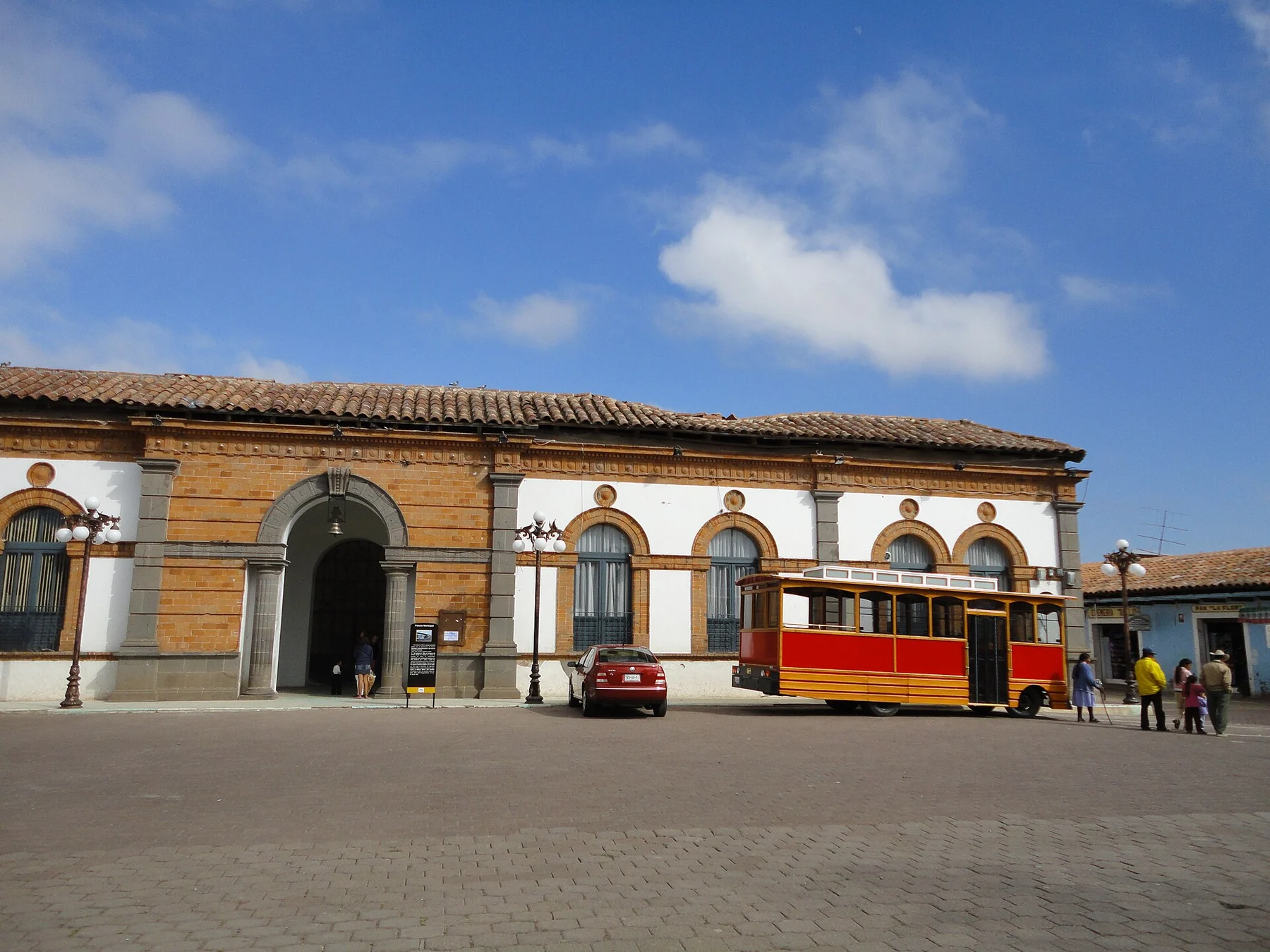
The parish and basilica also require specific entrance information. An active religious service may affect movement, and a visitor may prefer a shorter interior visit with a rest outside. Ask where the vehicle can stop and which entrance is appropriate. The centre guide and the basilica guide keep the buildings distinct, so an access answer about one is not mistakenly applied to the other.
Thermal access continues beyond the entrance
The thermal operator mentions an elevator in its general information, but that does not establish the full route into every pool or the availability of a hoist. Ask about parking-to-reception access, changing spaces, showers, toilets, pool-edge surfaces and the actual method of entering and leaving the water. Different admission categories may use different areas. A facility can be accessible to observe or accompany someone without being suitable for every person to bathe independently.
For a hotel stay, check the room and bathing arrangement in the selected category rather than a generic property description. If a thermal tub has a high edge, a room otherwise described as accessible may still not meet your needs. Ask for the relevant measurements and images. The thermal guide explains the packages, while the accommodation guide helps compare a facility-focused stay with a central base and separate outing.
Treat waterfall routes as a specific physical commitment
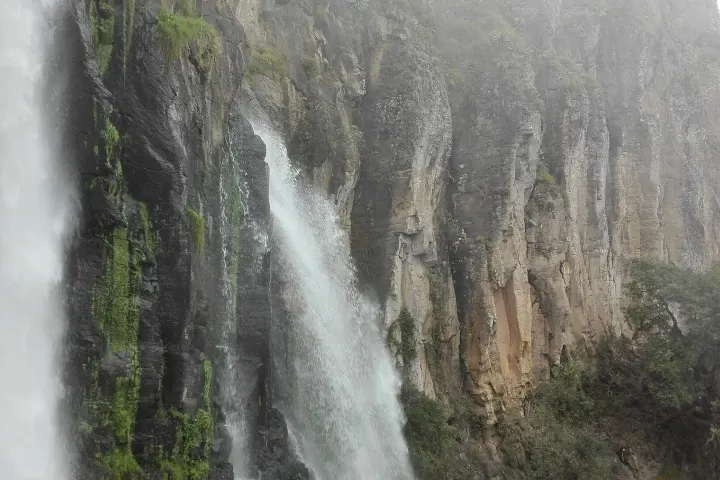
Quetzalapan can involve substantial steps and a climb back. Ask which viewpoint the proposed visit reaches, whether a shorter option exists and how that alternative connects with the rest of the group. Do not assume a companion can solve the route by carrying a mobility aid or helping on wet steps. A partial visit can be worthwhile when it is chosen knowingly and the waiting or meeting arrangement is comfortable and clear.
The same principle applies to optional bridges or adventure activities: eligibility and equipment need the responsible operator’s assessment. A general tourism description is not an access audit. If the waterfall is unsuitable, a craft-and-town day can preserve the trip’s quality without forcing a difficult route. The waterfall guide explains the outing and the day-plan options provide alternatives that can be adapted around the group’s actual abilities.
Confirm the room and build a shorter day if needed
For accommodation, ask about the full route from vehicle to room, the room’s floor, lift reliability where relevant, doorway clearance, bed access and bathroom layout. A listing’s accessibility filter is a starting point, not a complete answer. Check that the hotel has assigned the appropriate room category and retain the confirmation. A scenic cabin or lagoon view may be attractive, but a central room with a workable bathroom and simpler transfers can be the better base.
Allow more time for transitions and rest rather than filling a private itinerary with the same number of stops as a fast group circuit. Choose the experiences that matter most and agree which can be omitted. The trip planner provides a brief, but it is not an accessibility certification. A successful visit is one in which the arrangements match the traveller, with enough specific information to decide before paying rather than discovering the essential barrier on arrival.
Known access features and known barriers
A few concrete facts help frame your questions. A 2024 Infobae report on the thermal complex mentioned an easy-access pool intended for people with disabilities and older visitors, as well as an elevator. The operator’s 2026 day-pool page we checked listed the general, Pirata, covered, VIP and family pools but did not name an easy-access pool, so ask directly whether it still operates and how the route to it works. The pools are kept at about 37 to 40 °C, which matters for anyone sensitive to heat.
The main barriers are physical. Chignahuapan sits at about 2,280 metres, which can make walking and climbing feel harder for visitors arriving from sea level. The descent to Quetzalapan waterfall is commonly quoted at around 365 stone steps, with the same climb back. The centre has slopes and uneven pavements in places. None of this rules out a visit, but it shapes the plan.
↔ Swipe or scroll sideways to compare all columns.
| Place | What we know | Question to ask |
|---|---|---|
| Thermal complex (Tenextla) | Elevator and an easy-access pool reported in 2024; pools about 37–40 °C | Is the easy-access pool open, and how do I get into the water? |
| Quetzalapan waterfall | Long stone staircase, often quoted at about 365 steps | Is there a viewpoint reachable without the stairs? |
| Historic centre | Compact plaza with parish, kiosk and basilica nearby | Where can a vehicle drop off closest to each entrance? |
| Bus to town | ATAH asks passengers to collect a printed ticket at least 20 minutes before departure | Can staff help with boarding and luggage? |
Altitude, temperature and pacing
Altitude affects people differently. Give yourself an easier first afternoon, drink water and avoid scheduling the most demanding activity right after a long road journey. Cold mornings and evenings, with a mean annual temperature near 12 °C, can stiffen joints and make waiting outdoors uncomfortable, so pack warm layers and a blanket or cushion if you use a wheelchair.
If heat or cardiovascular conditions are a concern, ask a clinician about time in water at around 37 to 40 °C before visiting the pools. Plan short sessions and know where the nearest shaded seating is. In an emergency, Mexico’s national number is 911. Use the planner to build a shorter day with fewer transitions.
- Book a central room to reduce vehicle transfers.
- Schedule one main activity per day with a rest block after lunch.
- Ask for a ground-floor room or confirm lift access in writing.
- Carry medication and a warm layer in a separate bag.
- Keep 911 and your hotel number saved offline.
Questions before you go
Does an accessibility badge guarantee the whole tour?
No. Read the route and ask about each stage. One verified listing combines such a badge with a substantial waterfall hike description.
Is a private tour automatically accessible?
No. It may allow an agreed adaptation, but the vehicle, entrances, toilets and walking route still need specific confirmation.
Does the thermal complex’s elevator prove pool access?
No. Ask how the traveller reaches the changing area, pool edge and water, including any steps or transfer equipment.
What should I send a hotel before booking?
Describe your functional needs and request details of the exact room, bathroom and route from vehicle drop-off. Measurements and photographs can resolve uncertainties better than a general label.
Is there an accessible pool at the thermal complex?
A 2024 report described an easy-access pool and an elevator. The operator’s 2026 page we checked did not list it, so confirm directly before visiting.
Can I see Quetzalapan without the stairs?
Ask the site. The route to the bottom is commonly quoted at around 365 steps; an upper viewpoint may be the only realistic option for some visitors.
Sources & editorial notes
Our bibliography distinguishes official tourism descriptions, dated event announcements, craft-protection documents and provider listings. A source check is dated evidence, not a live opening-status guarantee.
- GetYourGuide / LOGISTICA Y DISTRIBUCION VERZA SA DE CV ↗
- Hotel y Aguas Termales de Chignahuapan: Hotel, balneario y spa ↗
- Booking.com ↗
- Infobae México: Aguas termales de Chignahuapan: horario, precio y todo lo que tienes que saber ↗
- Aguas Termales de Chignahuapan: Balneario: categorías, servicios y horario ↗
- Food & Pleasure: Parque ecoturístico Salto de Quetzalapan ↗
- Secretaría de Turismo, México: Chignahuapan, Puebla ↗
- Autotransportes Tlaxcala Apizaco Huamantla: Venta de boletos e información para pasajeros ↗