Sources checked 4 November 2026 · Check your selected date with the provider
Some links are affiliate links. We may earn a commission on qualifying bookings at no extra cost to you. This does not determine your price or guarantee availability.
Begin at the plaza and take in the whole setting
The central plaza is more useful as an orientation point than as a single photo stop. Notice how the kiosk, religious buildings, shops and daily movement relate to one another. Find a comfortable place to pause before deciding the order of the walk. This is especially helpful after a long road arrival, when rushing straight into a store can leave you without a sense of the town or the location of your eventual meeting point.
The Mudéjar-style kiosk is one of Chignahuapan’s recognized landmarks. Appreciate its form and decorative character without needing to turn every architectural detail into a claim about age or origin. If an event, maintenance barrier or crowd limits access, a view from the surrounding square may be the appropriate visit. Historical photographs show the landmark, but they do not establish present arrangements. Keep the route flexible enough to enjoy the square without assuming unrestricted access to every part of it.
Read the parish as a building with a history
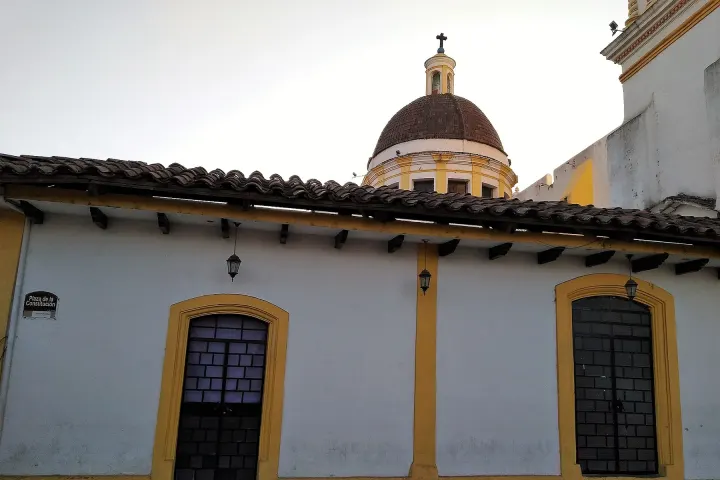
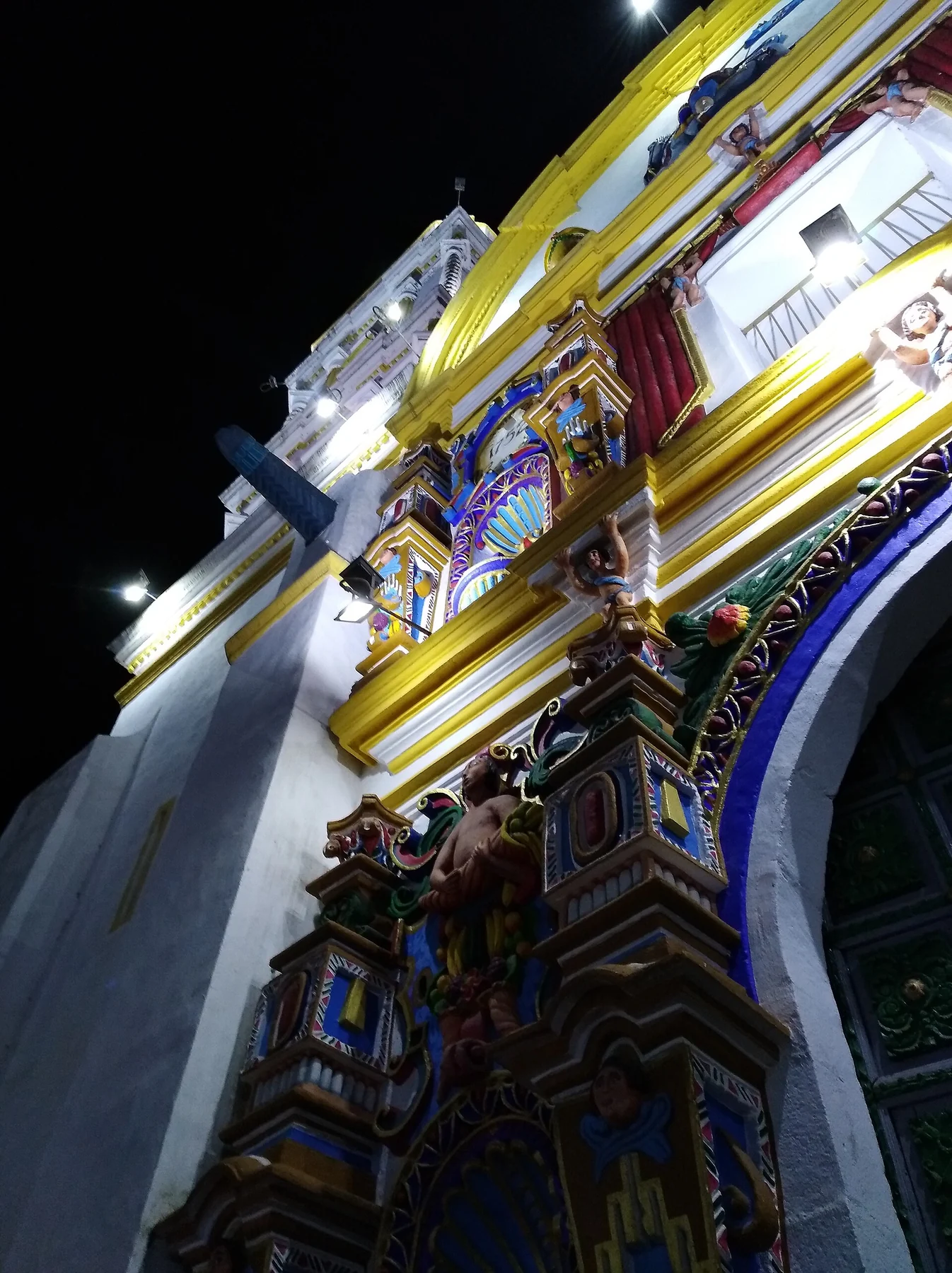
The parish of Santiago Apóstol is a different religious building from the Basilica of the Immaculate Conception. Official tourism and cultural descriptions associate the parish with a long history and a richly decorated façade. Buildings develop through phases, so it is more accurate to recognize that layered history than assign every element a single construction date. Take time to look at the façade’s composition before moving inside, if visitor access is appropriate at that moment.
An active church is not simply a museum room. A service, private observance or local requirement can shape when and how visitors enter. Keep voices low, avoid blocking circulation and ask about photography where the rules are not clear. If the interior is unavailable, the exterior still offers a worthwhile architectural stop. The basilica guide explains the separate visit so that you do not arrive expecting the monumental Marian image to be in the parish.
Give the basilica its own attention
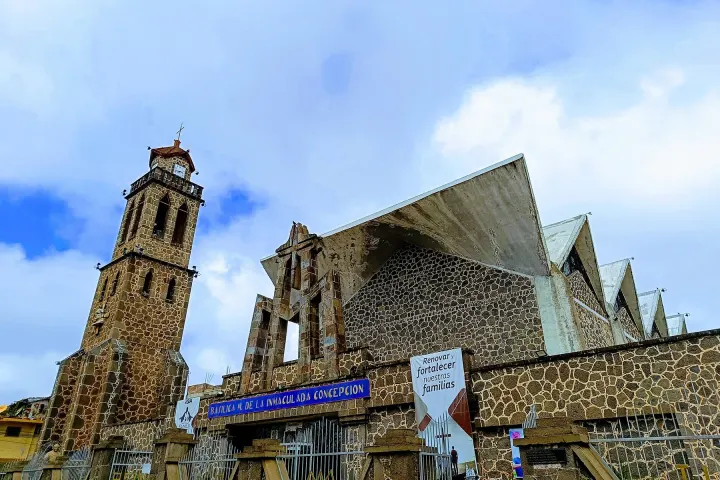
The basilica’s defining feature is its monumental wooden image of the Immaculate Conception, documented by official tourism sources. Its scale and devotional role are the reasons to visit, rather than an unverified ranking such as “the largest in the world.” Approach it as an active sacred place with its own atmosphere. A short visit can be meaningful when it is quiet and respectful; it does not need to be treated as another item to photograph and immediately leave.
If you are with a guide, ask for the story outside or in a suitable place where an explanation will not disturb worship. A group should be ready to adjust its pace if a service is taking place. Visitors with mobility needs should ask about the entrance and route to the area they want to see, rather than assume that a broad tour accessibility label applies to the building. Details belong to the actual day and route, not to a generic destination description.
Follow the craft into the streets
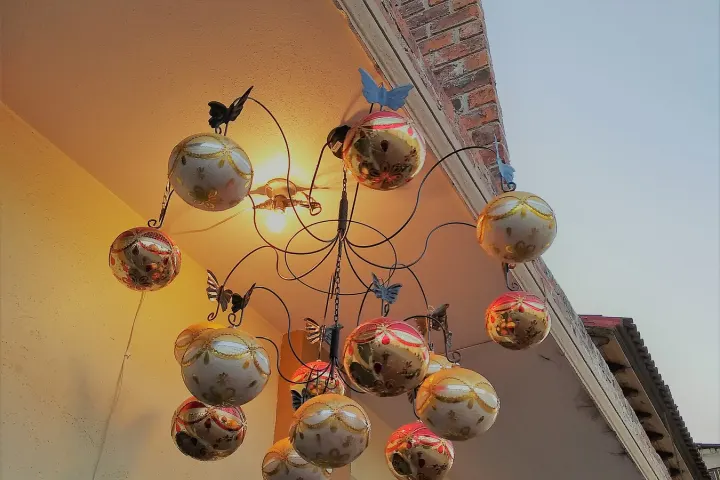
Ornament shops make the centre visually distinctive, but the retail display is only part of the story. Ask which items are glass and where they are made. A shop may represent its own workshop, several producers or a mixed product range. Browsing is a good way to identify styles you like before committing to a larger purchase. If you want to see production, use the shop conversation to arrange the right visit rather than assuming work happens behind every counter.
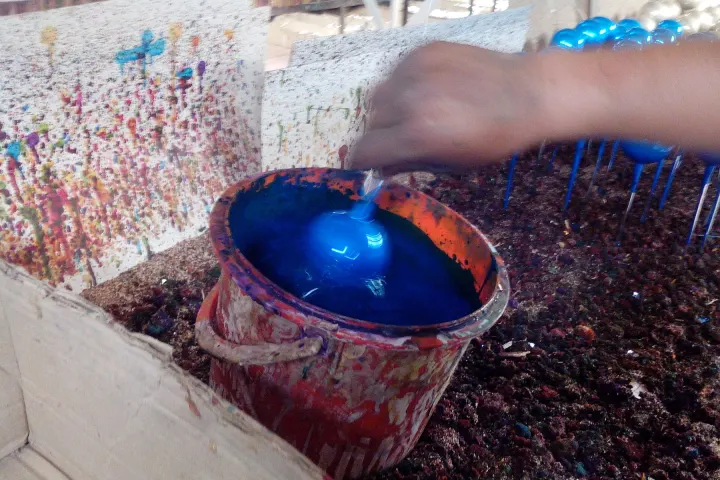
The workshop guide explains the difference between a shop, viewing area and scheduled demonstration. Plan the walk so that fragile purchases do not become a burden during the rest of the day. A small box can be manageable; several bags may change your route back to a vehicle or hotel. Leave enough time for packing and avoid making the group’s departure deadline the seller’s problem. The town is more enjoyable when shopping is deliberate rather than hurried.
Add art and food without pretending every stop is essential
Official tourism material also identifies a Mural Cosmogónico with Nahua cosmological themes. If this interests you, ask locally for the current location and visitor access as part of a wider town walk. Look for the work’s on-site attribution and interpretation to learn about its artist and themes, and ask whether a guide can explain it. Choose the stops that connect with your interests rather than treating a longer checklist as proof of a better cultural visit.
Food gives the walk a natural pause. Look for a meal or snack that suits your appetite and the available menu rather than trying to sample every regional dish at once. Tlacoyos, barbacoa, traditional sweets and fruit products are useful starting points for questions. The food guide describes those options and the practical issues around ingredients and take-home purchases. A meal also gives children or less mobile travellers time to rest before deciding whether to continue.
Make the walk work for your group
Check the route in terms of surfaces, steps, crossings and places to sit, not only distance. A short walk can still be tiring when it includes standing in shops or repeated changes of level. If travelling with someone who needs assistance, identify a clear vehicle drop-off and a shorter route that retains the most important sights. A companion should not have to discover an inaccessible entrance only after the group has moved ahead to the next stop.
For families, alternate looking, listening and sitting rather than stringing together several long explanations. Keep children close around fragile merchandise and busy streets. If the weather turns wet, a suitable open indoor stop can help, but a church or workshop should not be treated as an unrestricted waiting room. Access planning and family travel offer specific questions that make the centre visit more comfortable without assuming facilities we have not verified.
Connect the centre to the rest of the trip
The centre can fill a rewarding part of a day without needing to absorb every nearby attraction. The lagoon is a separate outdoor setting, Tenextla is the thermal-facility area and Zacatlán is another town. If you have only a brief group-tour stop, use it for the sights included and save a more independent walk for an overnight visit. If you are staying locally, the centre can be revisited at a calmer pace rather than completed in one uninterrupted march.
Our one-day plan pairs the centre with a main interest, while the overnight plan leaves more room for a workshop and meal. Before finishing the walk, locate your actual return pickup or hotel route and organize any purchases. The most useful memory of the centre may be a detail in the façade, a craft conversation or a dish you had time to enjoy. Those experiences require attention more than a rigid hourly schedule.
What the main landmarks are, in brief
Chignahuapan’s name comes from Nahuatl and is usually glossed as “on the nine waters”, a reference to the springs that feed its lagoon. The federal tourism profile records the founding of Santiago Chiquinahuitle in 1527, and the parish still carries the name of Santiago Apóstol. Encyclopedia and travel references describe it as a 16th-century Franciscan foundation whose decorated façade was worked in argamasa (lime mortar) in the 18th century by Indigenous artisans; its tower clock is credited to Relojes Centenario of neighbouring Zacatlán.
The kiosk in the plaza is usually dated to the early 20th century. It is built of wood, with decoration described as Mudéjar in style, and is often said to be unusual among Mexican bandstands for its timber construction and the fountain sheltered beneath its roof. Treat those uniqueness claims as local pride rather than a verified record. Nearby, a statue honours the comedian Gaspar Henaine, “Capulina”, who was born in the town, a light-hearted stop that children often enjoy.
↔ Swipe or scroll sideways to compare all columns.
| Landmark | Key facts (hedged) | Visitor tip |
|---|---|---|
| Parroquia de Santiago Apóstol | 16th-century Franciscan foundation; 18th-century mortar façade; Centenario tower clock | Look at the façade in morning light before entering |
| Kiosk | Early 20th-century wooden, Mudéjar-style bandstand with a fountain under its roof | View it from several sides of the plaza |
| Capulina statue | Honours comedian Gaspar Henaine, born in Chignahuapan | An easy photo stop for families |
| Basílica de la Inmaculada Concepción | Houses a cedar image of Mary quoted at about 12–14 m | A separate visit a short walk from the plaza |
The patron saint’s day and other dated moments
The centre changes character on its big days. The federal tourism profile lists the fiesta of the patron saint, Santiago Apóstol, on 25 July, with a procession, fireworks and food shared with visitors. On that date the plaza and parish become the stage for a community celebration, so expect crowds, closed streets and a different kind of visit from a quiet weekday walk. Respect processions and ask before photographing people taking part.
Around 1 November the Festival de la Luz y de la Vida centres on the lagoon, and in late November the ornament fair and seasonal lights bring buyers into the streets. Outside those dates the centre is calmer and better for a slow look at the façade and kiosk. Local travel listings place the town taxi stand beside the main plaza, which is useful when you want to continue to the lagoon, the thermal complex or Quetzalapan. Our festival guide covers the November evening in detail.
- 25 July: patron saint’s fiesta of Santiago Apóstol, with procession and fireworks.
- Around 1 November: Festival de la Luz y de la Vida, focused on the lagoon.
- Late November to December: ornament fair and seasonal decorations in the centre.
- Ordinary weekdays: the quietest time for architecture and unhurried photographs.
Questions before you go
Are the parish and basilica the same building?
No. Santiago Apóstol parish and the Basilica of the Immaculate Conception are separate religious visits. The monumental Marian image is associated with the basilica.
Can I follow this as a timed walking tour?
It is a flexible route, not a timetable. Interior access, services, weather and your group’s pace determine how it works on the day.
Does every shop have a working factory behind it?
No. Retail shops, production sites and visitor demonstrations are different arrangements. Ask specifically if you want to see the craft process.
Is the centre step-free?
We do not make that general claim. Check the exact pavements, entrances and facilities required for your route and mobility needs.
How old is the parish?
References describe a 16th-century Franciscan foundation, with the decorated mortar façade added in the 18th century. Exact construction dates for each element are not established here.
Where do taxis wait in the centre?
Local travel listings place the taxi stand next to the main plaza. Agree the destination and fare before setting off.
Sources & editorial notes
Our bibliography distinguishes official tourism descriptions, dated event announcements, craft-protection documents and provider listings. A source check is dated evidence, not a live opening-status guarantee.
- Secretaría de Turismo, México: Chignahuapan, Puebla ↗
- Secretaría de Cultura, México: Chignahuapan: de esferas y tradiciones ↗
- Visit Mexico: Parroquia de Santiago Apóstol ↗
- Visit Mexico: Basílica de la Inmaculada Concepción ↗
- Visit Mexico: Mural Cosmogónico de Chignahuapan ↗
- Wikipedia (es): Chignahuapan ↗
- Wikivoyage: Chignahuapan travel guide ↗