Sources checked 4 November 2026 · Check your selected date with the provider
Some links are affiliate links. We may earn a commission on qualifying bookings at no extra cost to you. This does not determine your price or guarantee availability.
Know which religious building you mean
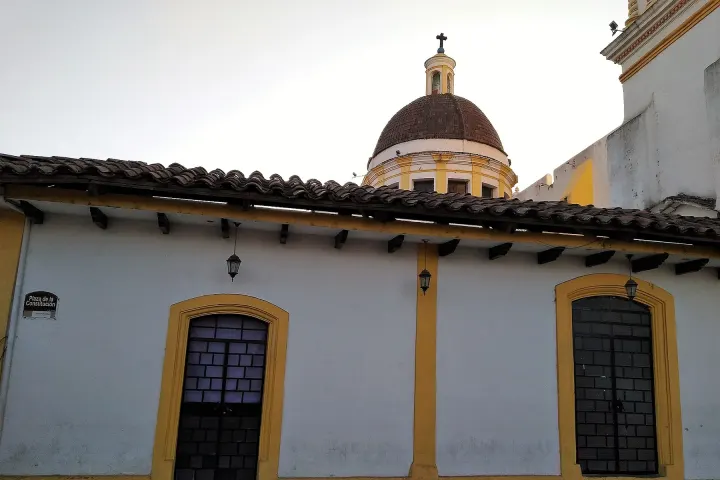
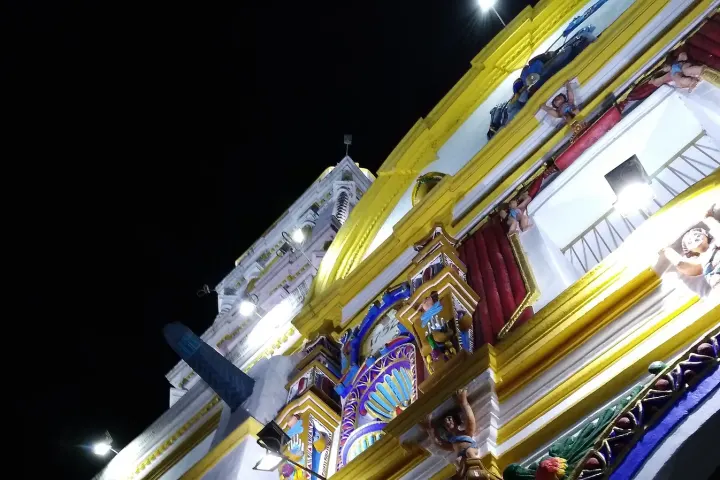
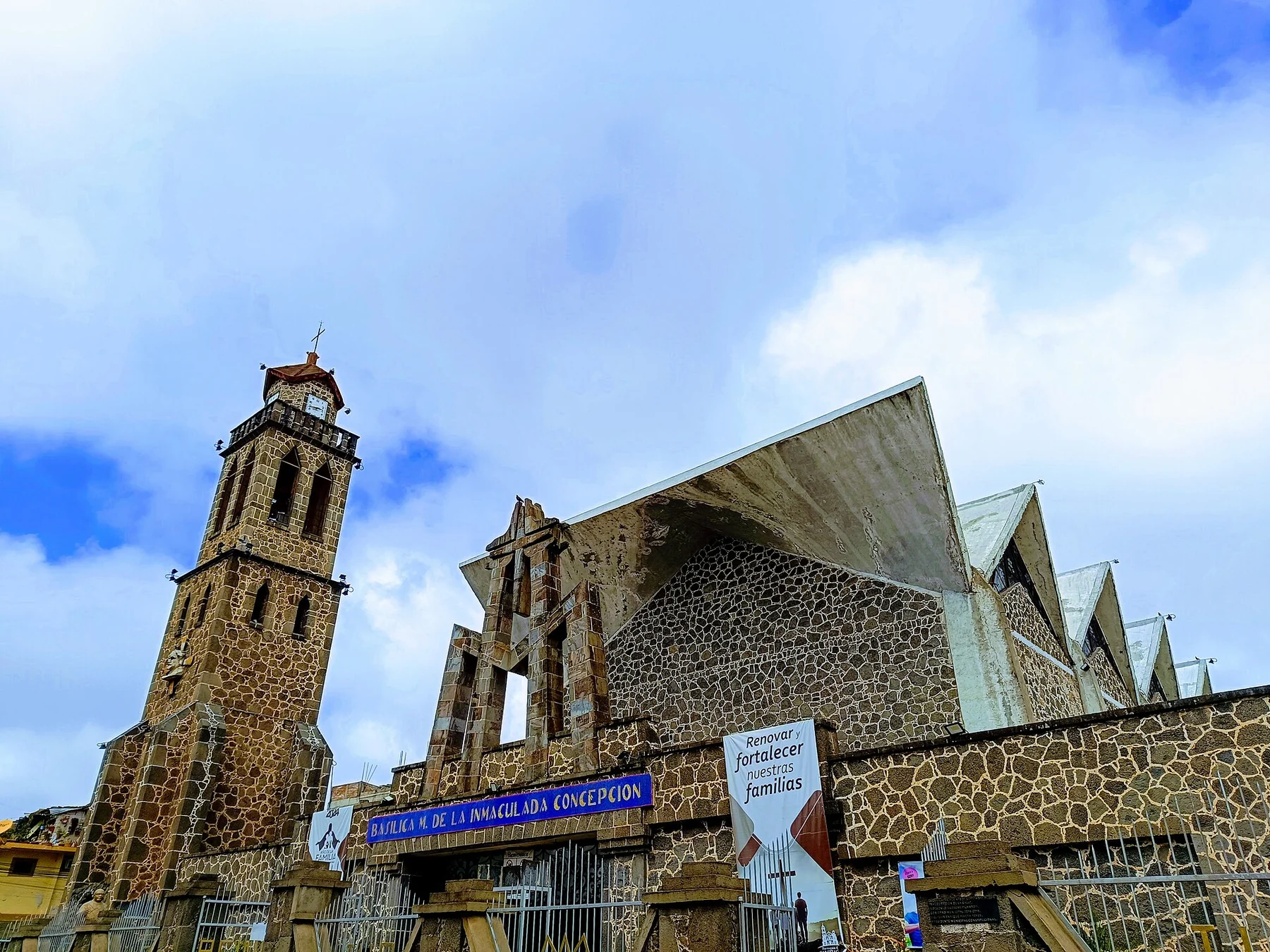
Chignahuapan’s centre contains more than one important religious landmark. The Basilica of the Immaculate Conception is associated with the large wooden image of Mary; Santiago Apóstol parish is a separate historic building with its own architectural interest. Tour descriptions sometimes mention both quickly, which can leave first-time visitors thinking they are two names for the same stop. Use the full name when asking a driver, guide or hotel for directions.
This distinction also helps with expectations. If your interest is the monumental interior image, a photograph of the parish façade does not prove that a tour includes the basilica interior. If your interest is historic exterior decoration, a brief basilica stop may not replace time at Santiago Apóstol. The centre guide connects the two within a wider walk while keeping their identities separate. Neither should be treated as a generic interchangeable church stop.
Appreciate scale without relying on unsupported superlatives
Official tourism descriptions identify a wooden image of exceptional scale as the basilica’s central attraction. Different travel pages repeat slightly different measurements and rankings. The experience does not require a disputed number to be impressive, so this guide avoids claiming a worldwide record or treating a rounded height as a precise architectural survey. Look at how the image occupies the interior and how visitors and worshippers relate to the space around it.
If you are travelling with children, this can be an opportunity to notice material, scale and craftsmanship rather than simply take a quick photo. A guide may help explain the devotional context, but the explanation should fit the atmosphere of an active religious building. For visitors interested in art, the meaningful questions concern the object’s role and construction, not only whether it is larger than another monument. This keeps the visit informative without building it around an unverified superlative.
Plan around worship, not just sightseeing
The basilica is a sacred place used by a community. Services, prayer and other observances can affect visitor movement and photography. This guide does not invent a daily Mass timetable or fixed tourist opening hours. Ask locally or through the provider for the arrangements on the day, and be prepared to wait or make a shorter visit if religious activity takes priority. A scheduled tour stop does not give a group unrestricted control of the interior.
Enter quietly, dress and behave respectfully, and follow posted instructions or staff guidance. Avoid walking between people at prayer and the focus of their worship merely to obtain a photograph. If you are part of a group, listen to longer commentary outside or in a suitable place. These are practical courtesies that let visitors appreciate the building while recognizing that it is not solely a tourist attraction. A respectful exterior visit is a reasonable alternative when interior access is unsuitable.
Photography and interpretation need permission
Do not infer photography permission from the number of images online. Rules can differ between general interior views, close photography, flash, tripods or a service in progress. Ask when the policy is unclear, and avoid photographing worshippers closely without consent. A quick personal photograph should not obstruct aisles or create a crowd at an entrance. The same care applies to a guide explaining the image: an informative visit should not make the space harder for others to use.
If you want a detailed explanation in English, choose a provider that actually offers that language rather than assuming staff at the building will provide an impromptu tour. Some verified Puebla products advertise bilingual guiding, while several shared circuits advertise Spanish. A private guide can connect the basilica with the town’s wider history, but any special access should be explicitly documented rather than presumed. The Puebla product comparison is useful for making that distinction.
Ask specific access questions
A general tour label such as “accessible” does not establish the route through every attraction. Ask about the vehicle drop-off, distance to the entrance, any steps or thresholds, interior circulation and a place to rest. If someone needs a wheelchair-accessible toilet, ask where it is and whether it is available during the planned visit rather than assuming the basilica provides one. The answers may determine the best order of stops and whether a companion should remain nearby.
For visitors who can walk but have limited stamina, standing through a long explanation can be as tiring as the route itself. Build a shorter visit around the feature that matters most and allow a seated break elsewhere in the centre afterward. A meaningful religious or art visit does not require seeing every angle. The access guide provides a reusable brief for the provider, while the town guide helps identify a less demanding overall day.
Pair the visit with a small set of nearby interests
The basilica works well as part of a town-and-craft day. An arranged ornament visit, the plaza and a meal can create variety without requiring another long road transfer. If you are on a combined Zacatlán circuit, understand that the basilica is one part of a larger schedule and may receive a shorter visit. Travellers who want more time for religious architecture or personal reflection may prefer an independent stay or a private itinerary agreed around those interests.
Do not attach a thermal session or waterfall merely because all are associated with Chignahuapan. Those outings have their own transport and physical demands. The one-day guide offers several distinct versions of a visit, and the overnight guide creates space for both the centre and an excursion. A carefully chosen combination lets the basilica retain its significance rather than become another hurried doorway on a long checklist.
Keep dated facts and personal expectations separate
A source check establishes that the basilica and its defining image are documented attractions; it does not establish that a particular service, entrance or visitor arrangement is available at the instant you arrive. Likewise, a historical photograph is not a live view of the interior. Read the guide as cultural preparation and use current local information for the operational details. This distinction is especially useful around major religious or civic events, when normal movement through town may change.
If the basilica is the main reason for your journey, make that clear when arranging transport or a tour. Ask for enough time to visit respectfully and a fallback if the intended access is not possible. A central room can make returning at another suitable time easier than a distant day trip allows. The accommodation guide compares those bases, so the transport and room choices support the visit rather than constrain it unnecessarily.
The image: what the sources agree on
Although exact measurements differ, the references we checked agree on the essentials. The image of the Immaculate Conception is carved in cedar and attributed to the sculptor José Luis Silva. Travel references say the carving took place between about 1966 and 1972, and an encyclopedia entry gives its inauguration as 12 May 1972. Published heights range from “more than 12 metres” to about 14 metres, a spread that may reflect whether the base is counted, so we quote it as roughly 12–14 m.
Descriptions of the iconography note that Mary holds the Christ Child, who in turn holds a white dove representing the Holy Spirit. Looking for that detail gives children and adults a focus beyond sheer size. The church was raised to the status of a minor basilica by a decree dated 25 August 1998, according to a Catholic church directory, and it belongs to the Archdiocese of Tulancingo, a reminder that Chignahuapan’s church ties run toward Hidalgo even though the town is in Puebla.
↔ Swipe or scroll sideways to compare all columns.
| Item | What we found | Confidence |
|---|---|---|
| Material | Cedar wood | Consistent across sources |
| Sculptor | José Luis Silva | Consistent across sources |
| Carving period | About 1966–1972 | Travel reference; hedged |
| Inauguration | 12 May 1972 | Encyclopedia entry; hedged |
| Height | About 12–14 m, depending on source | Varies; no single official survey seen |
| Basilica status | Minor basilica, decree of 25 August 1998 | Church directory |
A short, respectful visit plan
Travel references place the basilica on Romero Vargas in the centre, a short walk from the plaza, so it combines naturally with the parish and kiosk. A visit of 20–30 minutes is usually enough to sit, look up at the image and notice the dove and the details of the robes; allow longer if you wish to pray or attend a service. Mornings on weekdays tend to be calmer than weekend afternoons, when tour groups and families arrive, but services take priority at any hour.
Bring a light layer: interiors of large stone churches in a highland town can feel cool. Silence phones, remove hats if that is the local custom you observe, and keep commentary for outside. If you want the story of the sculpture in more depth, a guided Puebla circuit or a local guide can explain it before you enter. The centre guide puts the basilica alongside the 16th-century parish, which makes the contrast between the two buildings clearer.
- Look for the Child holding a dove, the symbol of the Holy Spirit.
- Sit for a few minutes to appreciate the scale before taking photographs.
- Pair the visit with the parish of Santiago Apóstol for a contrast of eras.
- Check whether a service is underway and wait or return later if so.
Questions before you go
Is the basilica the same as Santiago Apóstol parish?
No. They are separate buildings. Use the full name when checking a tour itinerary or asking for directions.
Is the Marian image the largest in the world?
We do not repeat that ranking. Official tourism material documents a monumental wooden image, which is sufficient to explain the visit without an unsupported superlative.
What are the opening and service times?
We have not verified a current daily schedule. Ask the basilica or your local provider for the arrangements on the intended day.
Can I take photographs inside?
Follow the current rules and ask if they are unclear. Online photographs do not prove permission for flash, tripods or photography during worship.
Who carved the image and when?
Sources credit the sculptor José Luis Silva, carving in cedar between about 1966 and 1972; an encyclopedia entry gives the inauguration as 12 May 1972.
How tall is the Virgin?
Published figures range from more than 12 m to about 14 m. We quote roughly 12–14 m because no single official measurement was available.
Sources & editorial notes
Our bibliography distinguishes official tourism descriptions, dated event announcements, craft-protection documents and provider listings. A source check is dated evidence, not a live opening-status guarantee.
- Visit Mexico: Basílica de la Inmaculada Concepción ↗
- Visit Mexico: Parroquia de Santiago Apóstol ↗
- Secretaría de Cultura, México: Chignahuapan: de esferas y tradiciones ↗
- GetYourGuide / Unlimited Experiences Puebla ↗
- Wikipedia (es): Chignahuapan ↗
- Wikivoyage: Chignahuapan travel guide ↗
- GCatholic: Basílica de la Inmaculada Concepción, Chignahuapan ↗