Sources checked 4 November 2026 · Check your selected date with the provider
Some links are affiliate links. We may earn a commission on qualifying bookings at no extra cost to you. This does not determine your price or guarantee availability.
Decide what you are buying before comparing prices
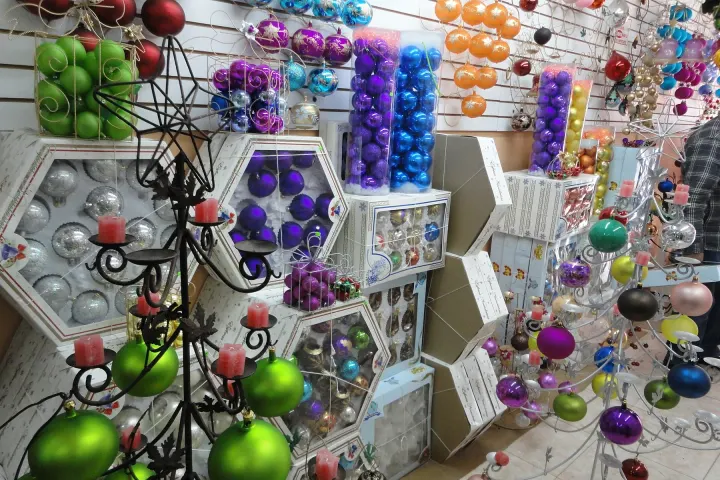
The word esfera is used broadly in seasonal shopping, and displays can contain glass, plastic and other decorations. Ask about the material of the specific piece, how it is made and where it comes from. A locally decorated glass ornament and a mass-produced plastic set are different products, even if they share a colour theme. Compare the item you actually want rather than assuming that the lowest box price represents the same craft or durability.
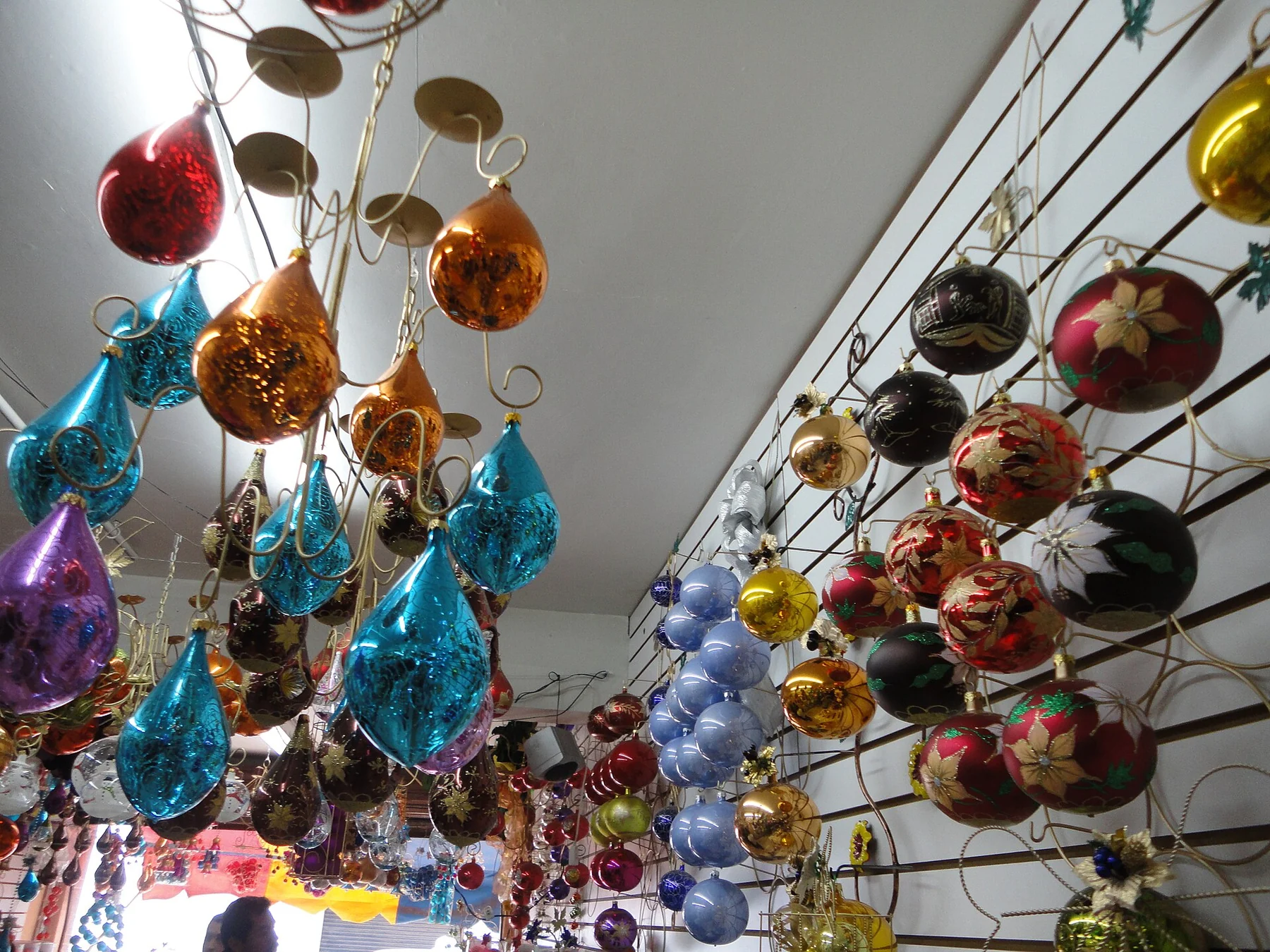
For handmade glass, look at the finish and decoration in normal light and inspect the neck and hanging hardware carefully without squeezing the piece. Variation can be part of handwork, but cracks and visible damage should be addressed before leaving the shop. If buying a matching set, check the number of pieces and whether the seller is packing the same designs you selected. Understanding the production process makes these choices more meaningful than shopping purely by colour and size.
Set a carrying limit, not only a spending limit
Think about the entire remaining itinerary. A box that fits comfortably on a private car seat may be awkward on a shared minibus, an intercity coach or an aircraft cabin. Your luggage already contains clothes, toiletries and other purchases. Before ordering a large quantity, decide how many rigid boxes you can reasonably manage while walking to a terminal, checking into a hotel and changing vehicles. Fragile shopping becomes less enjoyable when it consumes every free hand.
Tell the seller how you will travel next. The useful question is not simply “Can you pack this?” but “Can you pack these shapes for this kind of journey?” Ask about compartments, support around narrow necks and protection against movement inside the box. Packaging practices differ, and decorative gift packaging is not necessarily transport packaging. If shipping is offered, establish the service, destination, price and handling terms separately rather than assuming a shop automatically sends international parcels.
Inspect the packing while help is available
Allow enough time at the shop to see how the pieces are protected and to identify the contents of each box. If several boxes belong to different travellers, label them before they are mixed with other bags. Keep the receipt or order details where you can find them without opening every package. Ask the seller how to lift and orient the box, especially when it contains unusual elongated shapes or pieces that do not fit a standard divider.
Do not repeatedly unwrap fragile pieces during the day just to show them to other people. Every handling step creates another opportunity to catch a hook, press on thin glass or lose a protective layer. A photo taken with permission before packing can serve that purpose. If you discover an issue while still at the shop, the seller can usually explain the packing or discuss the purchase far more effectively than after you have crossed the country. This is a reason to avoid shopping in the final rushed minutes of a group stop.
Carrying ornaments in a car or private vehicle
Keep fragile boxes where they cannot slide, tip or be crushed by heavier luggage, using the seller’s advice for the contents. Do not leave them loose in a footwell where passengers will step or under bags that shift on bends. A driver needs to know about the boxes before loading the vehicle. For a shared tour, luggage space belongs to the whole group, so a large purchase should be discussed before assuming an extra seat or compartment will remain free.
Avoid combining the ornament box with wet swimwear, muddy shoes or an open drink. Thermal facilities and waterfall outings are easier before the main shopping, or with suitable storage arranged at your hotel. This is a route-planning issue as much as a packing issue. The local movement guide suggests grouping active outings and purchases sensibly, while an overnight stay can provide time to inspect and organize everything before the long return.
Buses and shared transport need an extra plan
Read the actual operator’s baggage conditions and ask where a fragile box may be carried. Do not assume that labelling it “fragile” changes handling procedures or that the driver will accept a large box in the passenger area. Keep aisles, exits and other passengers’ space clear. A rigid, manageable package is easier to negotiate than several open shopping bags, but the provider’s rules and available space still govern what you can take.
ATAH’s official site is the appropriate starting point for its passenger instructions and ticket conditions. Your souvenir plan should not interfere with carrying the documents required to travel. Put identification, tickets and essential items in a separate accessible bag so you are not opening a carefully packed box at the boarding point. If you have bought more than your transport can reasonably carry, resolve that while still near the seller or accommodation, not at the vehicle door.
A later flight changes the comparison
An airline’s current cabin and checked-baggage limits depend on the carrier, fare and route. Measure and weigh the proposed package against the rules for your actual booking rather than following a universal travel-blog allowance. A box that qualifies for one flight may not qualify for another segment. If you plan to carry ornaments in the cabin, confirm how the box counts toward your allowance; personal preference does not guarantee acceptance at the gate.
Checked baggage introduces handling and compression that ordinary retail packaging may not be designed to resist. Ask about stronger packing and consider whether a smaller purchase is the better decision. If shipping is available, compare its documented terms and total cost with the extra baggage option, without assuming either guarantees an unbroken arrival. For international travel, check the destination’s import and customs rules for everything in the parcel, including any food or other souvenirs packed alongside the ornaments.
Preserve the story as well as the object
Keep the maker’s or shop’s name with the pieces, especially if you watched a demonstration and want to remember the process. Ask about suitable cleaning and storage for that particular finish; not every painted or reflective surface should be treated in the same way. Retain the compartmented box if it is useful for seasonal storage. A carefully chosen ornament can carry a memory of the town without requiring a large collection or an expensive purchase.
Buying thoughtfully also means respecting the time required for explanation and packing. If a tour schedule is tight, choose a manageable order or ask about another purchasing arrangement rather than pressuring a seller to hurry fragile work. The seasonal guide helps plan the visit around your interest, and the food guide offers less fragile local experiences to enjoy while there. The aim is a souvenir you can use and remember, not simply the largest box you can buy.
Reading an ornament like a maker
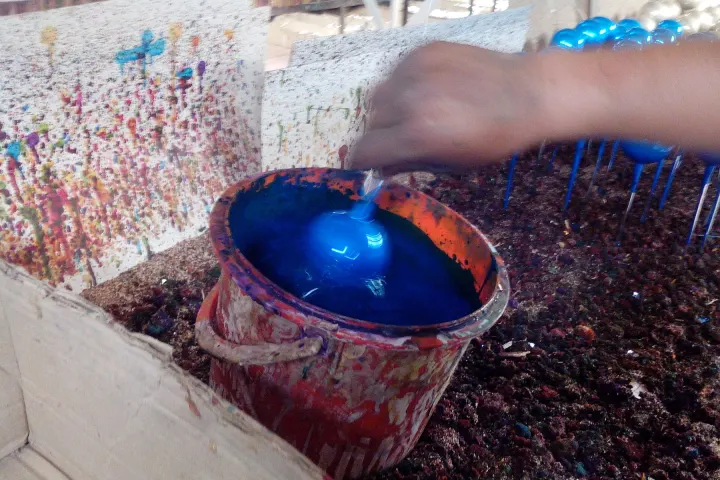
The official geographical-indication declaration describes a hand process in which a silver-nitrate solution is swirled inside the blown glass to give the mirror finish, then the piece is dipped in paint, decorated by hand and fitted with a cap and hanger. It also names industrial metallising as a substitute for artisanal silvering. That gives you a practical vocabulary at the counter: ask whether a piece is plateada a mano (hand-silvered) and soplada aquí (blown here), and whether the decoration is hand-painted.
Hand-painted pieces vary slightly from one to the next, and a personalised name or design takes time to paint and dry. If you want lettering, order it early in your visit rather than at the end, and ask when it will be ready to pack. Sets that must match exactly are easier to buy from one batch at one shop than to assemble across several stores. The workshop guide explains the seven production stages behind these choices.
↔ Swipe or scroll sideways to compare all columns.
| Feature | What it usually tells you | Question to ask |
|---|---|---|
| Mirror-like interior | Silvered glass, by hand or by an industrial substitute | ¿Está plateada a mano? |
| Slight irregularities in brushwork | Hand decoration, normal for artisanal pieces | ¿Está pintada a mano? |
| Very light, flexible feel | Possibly plastic rather than glass | ¿Es de vidrio o de plástico? |
| Name or custom motif | Painted to order; needs drying time | ¿Para qué hora estaría lista? |
| Loose or tilted cap | Hardware fitted poorly or knocked | ¿Me la puede revisar antes de empacar? |
A packing kit worth bringing from home
Sellers usually have boxes and paper, but a few items of your own make the journey easier, especially if you are moving between buses, hotels and a later flight. A collapsible rigid box or a sturdy plastic container keeps pressure off thin glass better than a shopping bag. Pack the heaviest items at the bottom of your main luggage and keep the ornament box where it can stay upright.
Timing matters as much as materials. During the busy weeks before Christmas, shops near the plaza can be crowded and packing a large order takes longer. Buying on your first afternoon and collecting the packed order the next morning, if the shop agrees, avoids handling glass in a hurry. If you are joining a group tour, ask the guide how long the shopping stop really is before choosing more than you can pack in that time.
- A small rigid container or collapsible crate for the most delicate shapes.
- Spare soft cloths or socks to fill gaps so pieces cannot move.
- Masking tape and a marker to label boxes by person or by contents.
- A separate bag for food and liquids so they never share space with glass.
- A photo of each box’s contents, taken before sealing, to avoid unpacking later.
Questions before you go
Is gift packaging enough for a flight?
Not necessarily. Explain the actual journey to the seller and compare the package with your airline’s current rules. Decorative presentation and transport protection serve different purposes.
Can I take a large box on a tour vehicle?
Ask the provider before buying. Passenger and luggage space may be limited, especially on shared departures.
Will every workshop ship internationally?
No such service is assumed here. If a seller offers shipping, ask for the destination coverage, total price, carrier and handling terms.
Should I buy ornaments before visiting the pools?
It is often easier to shop after wet or active outings, or to use suitable storage arranged with your accommodation. Keep fragile pieces separate from wet clothing and heavy bags.
How can I tell hand-silvered glass from an industrial finish?
It is hard to judge by eye alone. Ask the seller directly whether the piece is plateada a mano; the official declaration treats industrial metallising as a substitute for the artisanal process.
Can I order personalised ornaments?
Many sellers paint names or designs, but drying time applies. Order early in the visit and agree a collection time before you continue sightseeing.
Sources & editorial notes
Our bibliography distinguishes official tourism descriptions, dated event announcements, craft-protection documents and provider listings. A source check is dated evidence, not a live opening-status guarantee.
- Diario Oficial / Secretaría de Gobernación: Declaración de protección de la Indicación Geográfica Esfera de Chignahuapan ↗
- El Castillo de la Esfera: Fábrica y visitas ↗
- Autotransportes Tlaxcala Apizaco Huamantla: Venta de boletos e información para pasajeros ↗
- México Desconocido: Así nacen las esferas en Chignahuapan ↗
- Secretaría de Turismo, México: Chignahuapan, Puebla ↗