Sources checked 4 November 2026 · Check your selected date with the provider
Some links are affiliate links. We may earn a commission on qualifying bookings at no extra cost to you. This does not determine your price or guarantee availability.
Start with tlacoyos and ask what is inside
Tlacoyos filled with alverjón are a useful introduction to the town’s food tradition. They belong to the wider family of filled maize preparations, with the filling and toppings affecting the final dish. Ask what is being served at the particular stall or kitchen rather than assuming one universal recipe. If you prefer mild food, request the salsa separately where possible; it is easier to add heat than remove it after the dish is prepared.
For dietary needs, identify the relevant ingredient rather than relying on the name of a bean- or pea-based filling. Cheese, animal fat, broth or shared cooking surfaces may matter to different diners, and a vegetable filling alone does not establish a vegan meal. Use clear questions and accept that not every small kitchen can guarantee an allergen-free preparation. A short, respectful conversation is more useful than treating a regional food label as a complete ingredient list.
Give barbacoa and a full meal enough time
Lamb barbacoa and its consommé are documented local food associations. A proper meal can be a rewarding centrepiece of the day, especially after a morning of walking or shopping. Ask about portion size, accompaniments and what remains available before ordering for the whole group. This guide does not promise that every business serves barbacoa at all hours or that the same preparation appears every day. If a particular dish matters, enquire early enough to choose another place or time.
Keep the driver or tour schedule in mind without rushing the kitchen. A restaurant stop included in an itinerary is not necessarily a meal included in the price. Ask whether the group chooses from a menu, uses a set meal or pays separately, and whether drinks are included. A tasting stop at another attraction is also not a substitute for lunch. The quote guide helps make these distinctions visible before an apparently inexpensive tour becomes a series of unexpected food charges.
Explore the wider savoury menu without expecting everything at once
Official tourism material also associates the town with mole and chicharrón prensado. Use those names as starting points for a menu conversation, not as a requirement to find a complete regional tasting menu at every restaurant. Preparation and accompaniments vary, and a family meal may be better when everyone chooses one dish they will enjoy. The goal is to experience local cooking at a comfortable pace rather than sample so many foods that the rest of the day becomes difficult.
A market or food stall can be a useful place to see what is actually being prepared. Confirm the opening arrangements locally and compare the food on offer before choosing a stall. Look for food that is appropriately prepared and a setup that suits your needs. If a business cannot explain an ingredient important to an allergy or other requirement, choose an option whose preparation you can establish rather than guessing.
Sweets and fruit products make a different souvenir
Pumpkin and tejocote sweets, fruit preserves and seed- or nut-associated traditional confections appear in official descriptions of Chignahuapan’s food. These offer another way to take a memory home, but they have their own practical issues. Ask about ingredients, storage and how long the product is intended to keep. A homemade-looking package without a clear explanation may be harder to transport or declare than a sealed item with appropriate information.
Keep food separate from fragile ornaments. A leaking jar can damage decorative surfaces and packaging, while a heavy preserve jar can crush glass if placed in the same bag. If you are flying internationally later, check the destination’s rules for the actual food and packaging rather than assuming every souvenir is permitted. The packing guide focuses on glass, but the same principle applies to food: choose a quantity and format that match the journey you still need to make.
Liqueurs and regional tastings need context
Fruit liqueurs are among the local products described in tourism material, while nearby Zacatlán is particularly associated with apples and cider. A combined tour may include a tasting connected to one town or producer. Read the itinerary to understand where it takes place and what is included. Do not turn every regional drink into a Chignahuapan specialty or assume that a tasting gives you unlimited samples, a full meal or a take-home bottle.
If you do not drink alcohol, tell the provider and ask how the stop works for you. Children and drivers need different arrangements, and a tasting should never create pressure to consume. For a bottle purchase, check the seal, volume and transport rules for your onward journey. Glass bottles and glass ornaments require separate protection. The Zacatlán guide explains the neighbouring town’s identity so that a regional food day remains geographically accurate rather than blending every product into one generic destination.
Choose the meal stop around the day’s real rhythm
A workshop appointment, a long road journey and a waterfall route create different meal needs. Carry a suitable snack when the next full meal is uncertain, within the vehicle or attraction’s rules, and give children or travellers with dietary needs enough notice of the plan. If you intend to use thermal facilities, ask about the package’s food arrangements and any restrictions on bringing food. A buffet mentioned on one ticket category may not be included in another.
For an independent town stay, use the evening to eat at a calmer pace and ask your host for current options near the actual property. A countryside cabin may require cooking provisions or a drive to dinner, while a hotel restaurant may have limited hours. The accommodation guide includes those location consequences, and the overnight plan shows how one night can improve the food experience without creating an unnecessarily complicated route.
Keep the experience local, specific and honest
Start with the documented food tradition, then choose from the menu and conditions you find on the day. Ask cooks and sellers about what they are proud of, listen to the explanation and order within your appetite. A simple dish prepared well can be a stronger memory than a checklist of supposedly essential foods consumed in a rush. Leave room for a second small stop if you want to compare preparations without ordering more than you can enjoy.
Pair a meal with the centre walk or a confirmed workshop visit, leaving enough time to enjoy both. If a desired dish is unavailable, choose another local option rather than treating the visit as unsuccessful. Food is part of everyday town life, not a guaranteed attraction inventory. Planning the meal thoughtfully helps you support a real business and enjoy the destination while keeping transport, dietary requirements and the rest of the day manageable.
A short menu guide to Chignahuapan dishes
Federal tourism material lists a compact set of local dishes and sweets. Knowing the names helps you read a market board or a handwritten menu. Barbacoa is lamb slow-cooked in a pit or oven; the consommé is the broth served alongside, often eaten first on a cool morning. Tlacoyos are oval maize cakes filled with alverjón, a dried-pea paste, and finished with toppings and salsa. Mole poblano and chicharrón prensado appear as fillings or main dishes depending on the kitchen.
Barbacoa is traditionally a weekend and morning food in much of central Mexico, so a late-afternoon visit may find it finished. That is a pattern to expect, not a rule for every business. Ask “¿Todavía hay barbacoa?” before committing the whole group to a table.
↔ Swipe or scroll sideways to compare all columns.
| Dish or product | What it is | Ordering tip |
|---|---|---|
| Barbacoa de borrego | Slow-cooked lamb with tortillas | Order by weight or by taco; ask for consommé on the side |
| Consomé | Broth from the barbacoa | Ask whether it includes chickpeas or rice before ordering for children |
| Tlacoyo de alverjón | Oval maize cake filled with pea paste | Request salsa aparte if you want it mild |
| Mole poblano | Rich sauce with chillies and spices | Usually served over chicken; ask about nuts if allergic |
| Chicharrón prensado | Pressed pork crackling, often used as a filling | Not vegetarian; ask what other fillings are available |
Sweets, drinks and the market
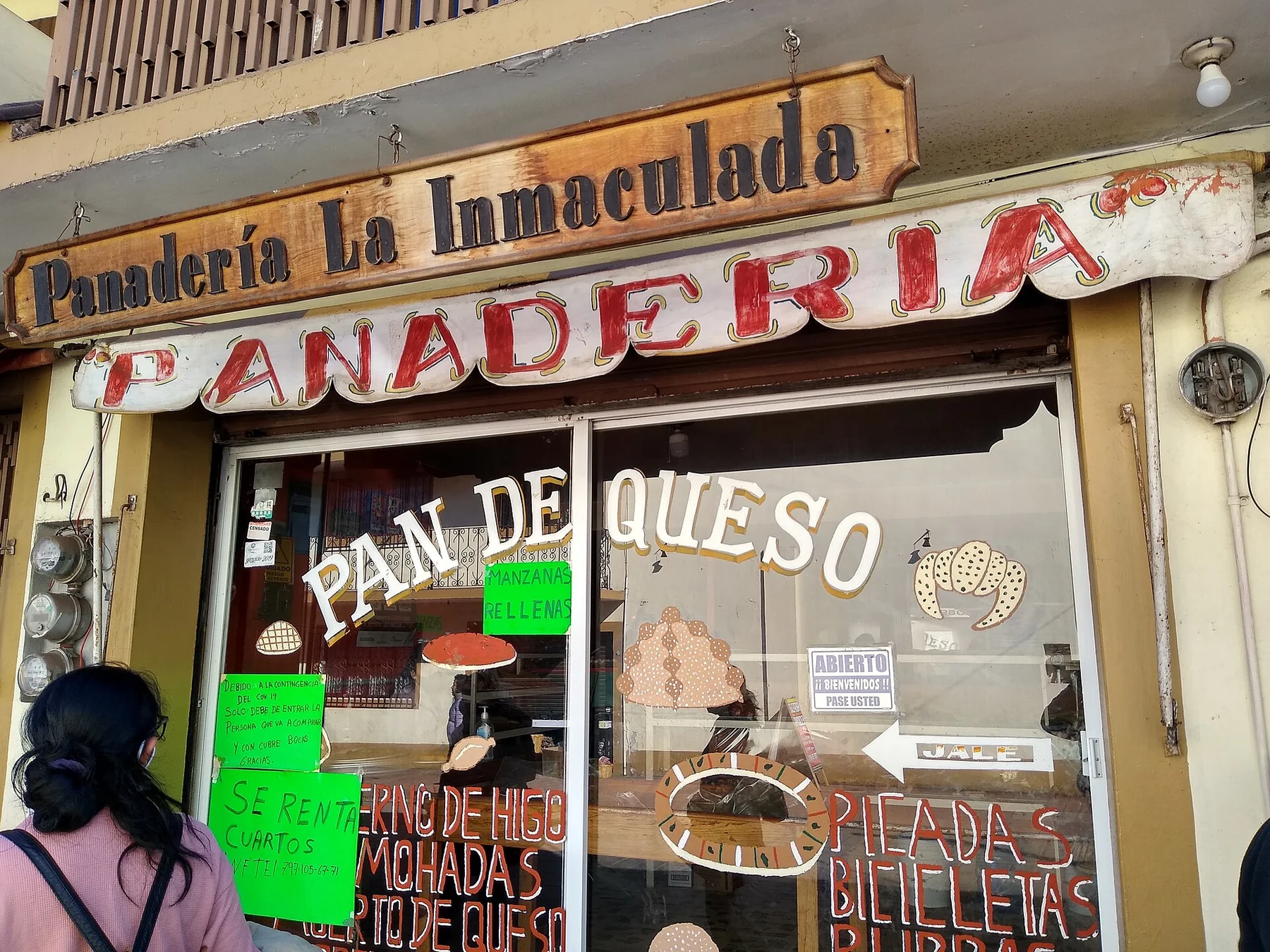
For a sweet stop, look for pumpkin and tejocote sweets, fruit preserves and jams, jamoncillos made with pumpkin seed and pine nut, milk sweets and cheese bread. Fruit wines and liqueurs are traditionally served as digestifs after a meal. Many of these keep better than fresh dishes, which makes them more practical souvenirs, but jars and bottles still need padding away from glass ornaments.
Wikivoyage lists the municipal market on Calle Morelos in the centre, with fresh produce and regional ingredients; confirm opening hours locally. A market visit is also a chance to see local crafts beyond ornaments: tourism material mentions red clay pottery such as pots and casseroles, and wool textiles including blankets and capes, which are useful in a highland town where evenings are cool.
Neighbouring Zacatlán adds apples, cider and its own bread; keep those separate in your plan. The Zacatlán guide covers that town’s food identity.
- “¿Qué me recomienda de la casa?” – What do you recommend?
- “Sin chile, por favor” or “la salsa aparte” – no chilli, or salsa on the side.
- “¿Lleva carne o manteca?” – Does it contain meat or lard?
- “¿Me lo envuelve para llevar?” – Could you wrap it to take away?
- “¿Aguanta el viaje?” – Will it keep for the journey?
Questions before you go
What local foods should I ask about first?
Alverjón-filled tlacoyos, lamb barbacoa and consommé are useful starting points. Official tourism material also lists mole, traditional sweets, fruit preserves and liqueurs.
Are alverjón tlacoyos automatically vegan?
No. Ask about the dough, cooking fat, toppings and shared preparation. A plant-based filling alone does not establish the complete recipe.
Does a tour tasting count as lunch?
Not necessarily. Read the meal inclusions and ask what the tasting provides. A restaurant stop can also be scheduled without the meal being included.
Can I bring food souvenirs home internationally?
Check the destination’s rules for the specific food and packaging. We do not make a universal customs or baggage allowance claim.
Is barbacoa available all day?
Not necessarily. In much of central Mexico it is a morning and weekend dish, and it can run out. Ask early if it matters to you.
What can I buy as a food souvenir that travels well?
Sealed sweets, preserves, jamoncillos and bottled fruit liqueurs generally travel better than fresh food. Check the packaging and any customs rules for your destination.
Sources & editorial notes
Our bibliography distinguishes official tourism descriptions, dated event announcements, craft-protection documents and provider listings. A source check is dated evidence, not a live opening-status guarantee.
- Secretaría de Turismo, México: Chignahuapan, Puebla ↗
- Congreso del Estado de Puebla: Gastronomía, cultura, fiesta y tradición de Chignahuapan ↗
- Secretaría de Turismo, México: Zacatlán, Puebla ↗
- GetYourGuide / Destinos Mágicos ↗
- Wikivoyage: Chignahuapan travel guide ↗
- Wikipedia: Zacatlán ↗